
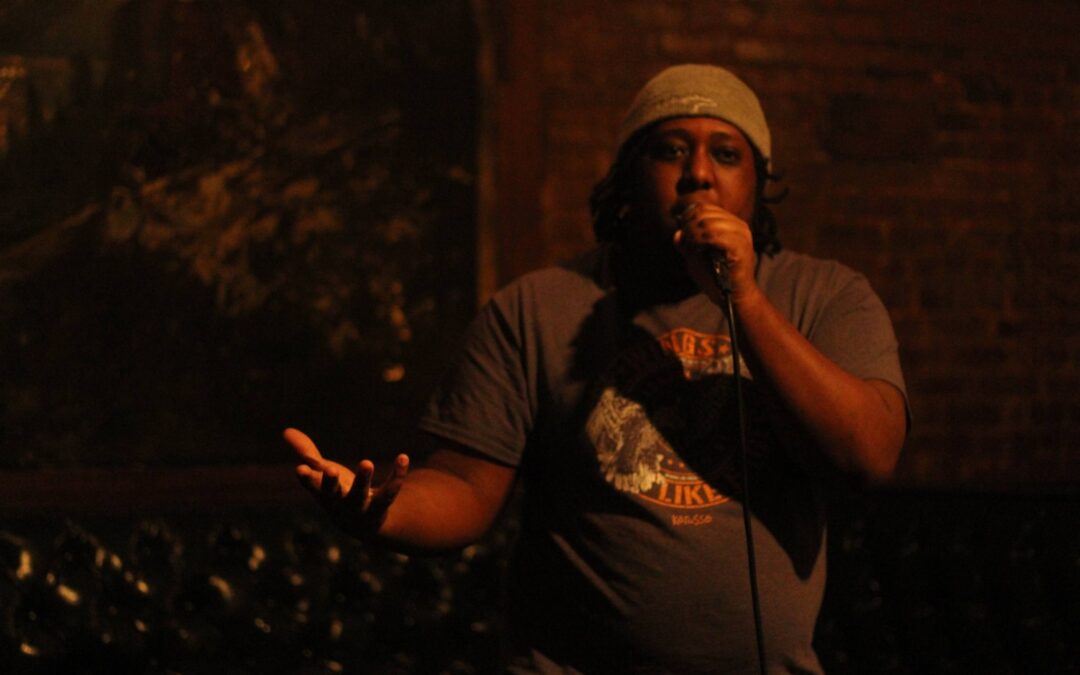
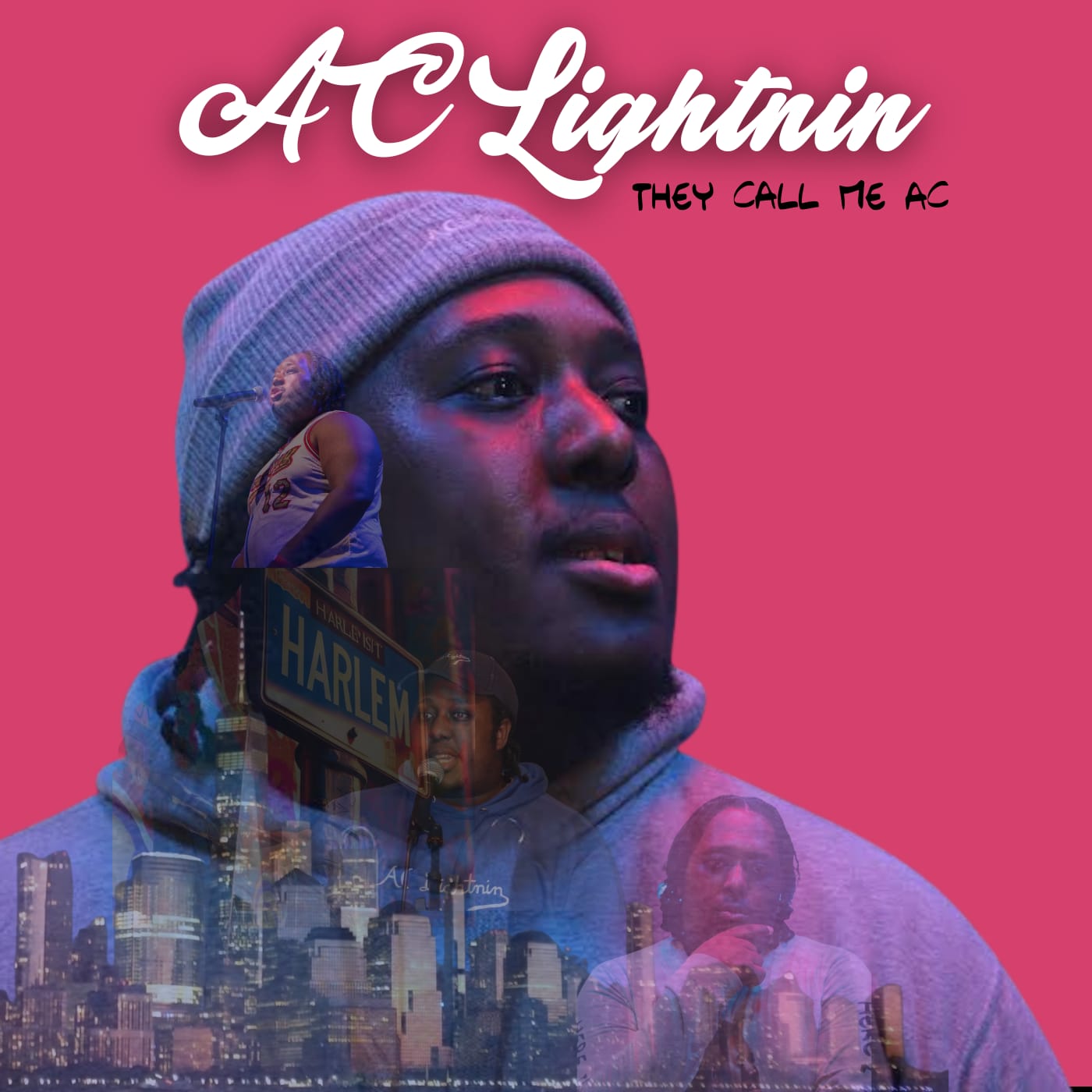
New York-based spoken word emcee and artist AC Lightnin uses his platform to share his journey. In his 12-track mixtape, They Call Me AC, he explores his transition from a self-described “geek” and student labeled as “emotionally disturbed” to a versatile performer who has turned a childhood speech impediment into a creative strength. That project drops on May 8th.
By blending hip-hop with poetry, he aims to provide a voice for those who don’t fit traditional archetypes within both the music industry and the church. He is advocating for a vulnerable and honest approach to the Gospel. Having performed across notable East Coast venues and poetry festivals, AC Lightnin continues to build a community through his work as a host, author, and rapper, encouraging other independent artists to sharpen their craft and impact their surroundings.
Presave his project here.
We had the opportunity to speak with AC about his life and music.
For those hearing about AC Lightnin for the first time, who are you, and why do you create music?
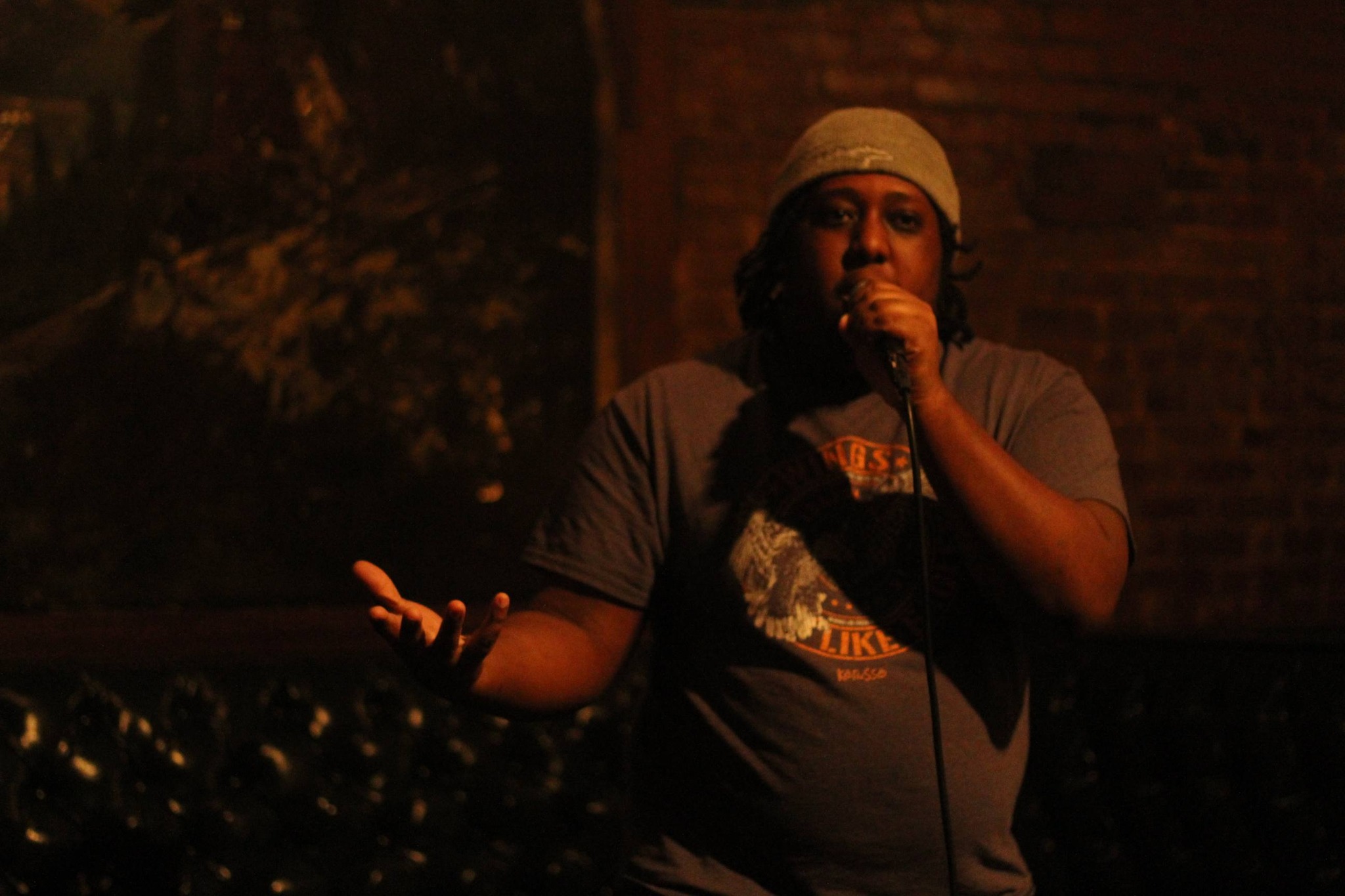
My name is AC Lightnin, and I’m a Spoken Word Emcee from New York. I wear many hats as an artist, performing as a host, poet, published author, rapper, and spoken word artist. In the nine years I’ve been an artist, I’ve performed across the East Coast in different states and at poetry festivals like The NYC Poetry Festival on Governors Island and Paterson Poetry Festival. Other events include Harlem Week and at some notable venues like The Delancey, The Triad Theater, Pianos, and SOBs.
I create music for a few reasons. I create music to express myself because I felt misunderstood by people in school and throughout my life. Creative writing helped me be able to formulate my thoughts and write them out in a beautiful way. The other reason I create music is that I want to be a voice to those who are like me: a geek/nerd, those who don’t fit the typical archetype of being a man and a Christian. And to be a voice that shines light on the unpopular opinions or conversations that often get overlooked.
Your project is called They Call Me AC, which is a perfect way to introduce your story. How does the project walk listeners through your journey as an artist and believer? What do you want them to take away from it?
They Call Me AC is a 12-track mixtape that encapsulates the odyssey that reflects on the last decade from my adolescence to the person I am now. Looking back on some of the things that have shaped my childhood to my early adolescence on this project, I want the listeners to see how this guy who grew up in a two-parent household and went on to be an incredible geek, to having the drive to be an artist, all the while trying to grow in his relationship with God.
What I want folks to take away from this project is that all of us are a work in progress, and we should always look at ourselves and see what ways we can look to God to make us better for his purpose. And to also admire our own journey. I believe this project has something in there for everyone to grab on to and relate to.
On the project, you talk about an encounter with Mormon women and then being taken to church by your dad. How did this experience change your life?
Yeah, summer 2012 was an interesting time in my life for a few reasons. In one of my songs, “Here I Am,” I met these two Mormon women on the A train one day on my way home from work. At first, I wanted to shoot my shot at one of the young ladies until we got into the discussion of religion, as they were on the train, inviting people to their Mormon church. After a few hangouts and talking to my parents about their church and lifestyle, I wasn’t feeling their way of life or what they believed in biblically.
The following summer in 2013, I remember telling my late dad that I wanted to explore my relationship with God more by going to church, so he took me to his mom’s church in Queens. While I was glad he took me to his mom’s church, I still wasn’t feeling God’s presence, and the church was kind of like an old school black folks’ church, so I stopped going after a while. My mom had been watching this televangelist for years, named Apostle Frederick K.C. Price, whom she admired so much. She found out that he had a church here in Manhattan. So she took me with her to that church, and that would start my journey to giving my life to God in 2014.
On “Emotionally Disturbed,” you talk about that label being thrown on you. How did you overcome that?
A good portion of my education in New York, I was in specialized schools. In those schools, you would have IEP’s tailored to help individual students succeed, as deemed fit. When I was older, I got a chance to read my own IEP and saw the phrase “Emotionally Disturbed.” After I found out what it meant, it rattled my confidence, and I felt like an outsider. Socializing as a kid came with its own challenges because you never knew if people would accept you for you. Since this was in elementary school to high school, I kept my nose to the books, had my parents and teachers show up for me when it was needed, and worked on my confidence. It wasn’t until 2021, reflecting on this point in my life, and seeing this was what held my confidence back.
You also talk about your speech and ability to talk. Now you rap and do spoken word. You turned that struggle on its head. What was that like?
I have always been into creative writing in some way, shape, or form. Whether it be fanfictions or short films. My behavior and my reactions to schoolmates teasing my speech impediment partly caused the “Emotionally Disturbed” label. My mom taught me how to write poetry when I was very young, and at first, I wasn’t into it. I only wanted to be a filmmaker and still do. Then, a few years later in high school, I started writing rap songs and joined a poetry organization that curated workshops. From there, that was a launching pad that led me to being a poet, a rapper, and connecting with other artists in the open mic scene here in New York.
You frequently perform spoken word pieces around NYC. How do you decide which pieces to use as spoken word and what to use as a song?
Usually, if I’m at an open mic or booked for a show, it really depends on whether it’s a strictly poetry event or a music event. And what I could be in the mood to perform. For some events, if I get booked for a 15-30 minute set, I would have sets where I can do both Hip-Hop songs and spoken word simultaneously or separately. It usually depends on whether I want to perform something new or if I’m in the mood to do either one. I know my bag of music and poetry is bottomless, and I can make it work either way.
NYC is a tough place to try to make it as a hip-hop artist. There’s a lot of competition, and in the Christian rap scene, there aren’t many. Do you have any thoughts about that?
When you’re the birthplace of Hip-Hop, one of the best genres in this whole world, you’ll get a lot of competition. I’m surprised, as there are a lot of churches in NYC, that there haven’t been a lot of Christian open mics. I think a lot of it may have something to do with some Christians not having an understanding of what poetry is or how to go about curating an open mic at their church and elsewhere. Or how some artists use rap and spoken word to express their feelings or talk about topics that don’t get talked about in church. And then some Christians and some churches have a negative outlook on music and poetry that isn’t praise and worship, because I see the constant debate about CHH’s place in the church online.
When I started in 2016, there weren’t any Christian open mics that were out there. I remember Co Campbell did start an open mic and artist development series called The Plug open mic in Mott Haven in The Bronx from 2016 to 2017, but stopped after a while. That’s how I met other Christian artists like Kei Landa and Th3 Saga. I’ve been to a few churches in the past that have done one-off open mics, but that was pretty much it. Now, the only open mic I can think of that’s really standing out and doing its thing on a constant basis is Open Heart Poetry, based out of Trenton, NJ, which I’ve been to several times. And The Ology, where they do showcases and whatnot.
AC Lightnin Music
For Christians who are artists, I would encourage you to go to open mics that may not be Christian open mics because you can still make an impact with your work, even if it’s not around other Christians. Going to open mics gives you a chance to sharpen your craft and network with other people and artists. Believe it or not, a lot of my opportunities to perform at some churches came from someone seeing me at an open mic, and they liked my work. Until you either start one yourself or can find one that already exists, I would go to open mics, and you may never know who needs to hear this message of hope, the message of the Gospel. Sometimes you can’t reach the people you want to reach behind the four walls of a pew.
What’s the toughest part about being an independent artist?
This answer is two-fold. One is accessibility to resources, as far as funding your own music career as an indie artist. Because, unless you already have money, funding it oftentimes has its challenges, to want to get things done in a timely manner, or to have things be polished and close to professional. The second is creating art in the context of who will receive your words and works, because a lot of times, music is subjective. However, there’s still this tug of war where a certain style of rap or music gets more love than others, which in turn sends this message that if you don’t do it like this, then it won’t get accepted. Not to say this is all the time, but it has happened enough.
Have you heard any testimonies from people about your music, and can you share a story if so?
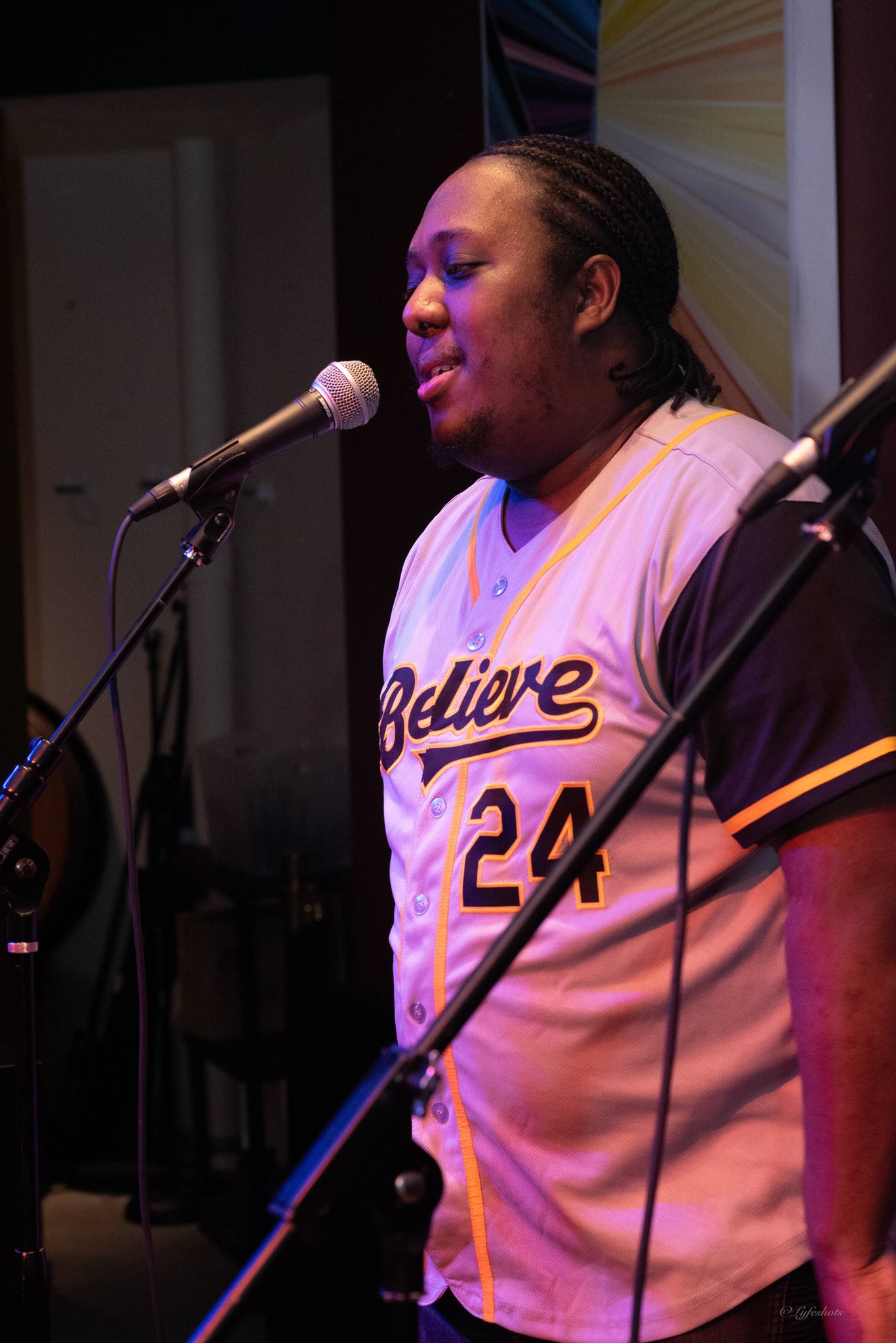
Yeah, I’ve had quite a few people and artists over the years who have complimented me for being bold about my faith. I remember I was at the Nuyorican Poets Café on a Monday night in 2019 for the open mic, and there was this young man who came out from Hawaii and stayed for the whole time and saw me and some of my artist friends perform. He couldn’t stay after the open mic to socialize, but he messaged me on IG and told me how the poem I performed that night resonated with him and how it was cool seeing other Christians performing poetry and bringing God on stage. I’ve also had people tell me a few times that my song, “Here I Am,” really touched them, from my performance to the storytelling.
What else do we need to know about AC Lightnin? Anything else to add?
I’m not your typical rapper and spoken word artist, and I try my best to be versatile in my works to the best of my ability, pulling from life experiences or pop culture to tell you stories, ideas, and points all from a faith-based lens. I already have two EPs out, Rehabilitation and Believe, which you can listen to in addition to They Call Me AC to hear more stuff about me.
I do a lot of stuff, from hosting to performing, so you can keep up and/or connect with me. You can follow me on Instagram @theaclightnin_ and on my Facebook and YouTube Channel, AC Lightnin, where you can see some clips of my performances. My website is aclightnin.com to join my mailing list, purchase merch, or donate, and you can check out all of my music on streaming platforms under the name “AC Lightnin.”
The post AC Lightnin Fuses Rap & Spoken Word Throughout NYC appeared first on Rapzilla.
Source: rapzilla.com
Original article: AC Lightnin Fuses Rap & Spoken Word Throughout NYC